How Collaborative Play Motivates Math Learners
Game-Based Learning
Feb 15, 2026
Feb 15, 2026
Team-based math games reduce anxiety, boost skills and scores, and build confidence by turning practice into collaborative, low-pressure problem solving.
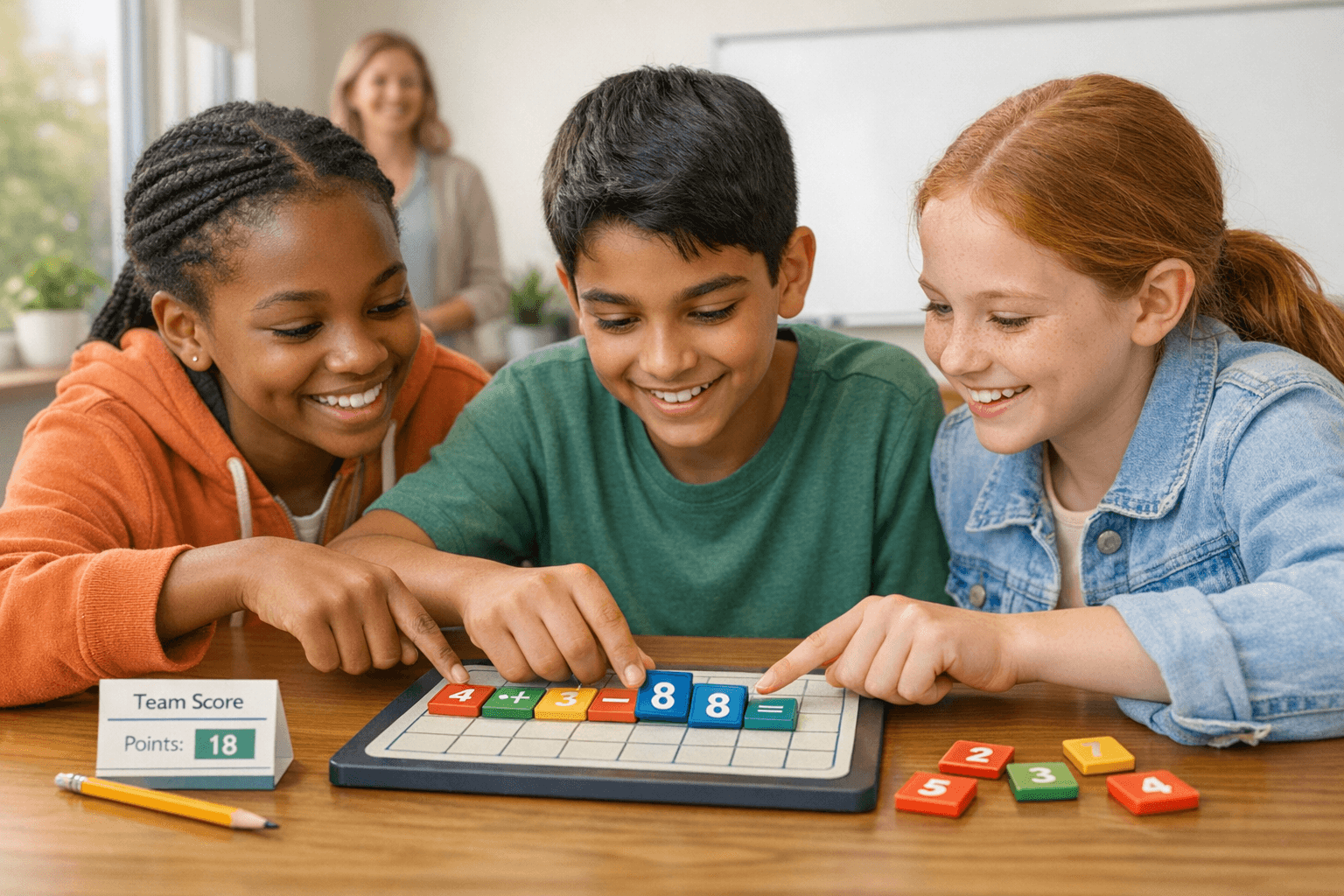
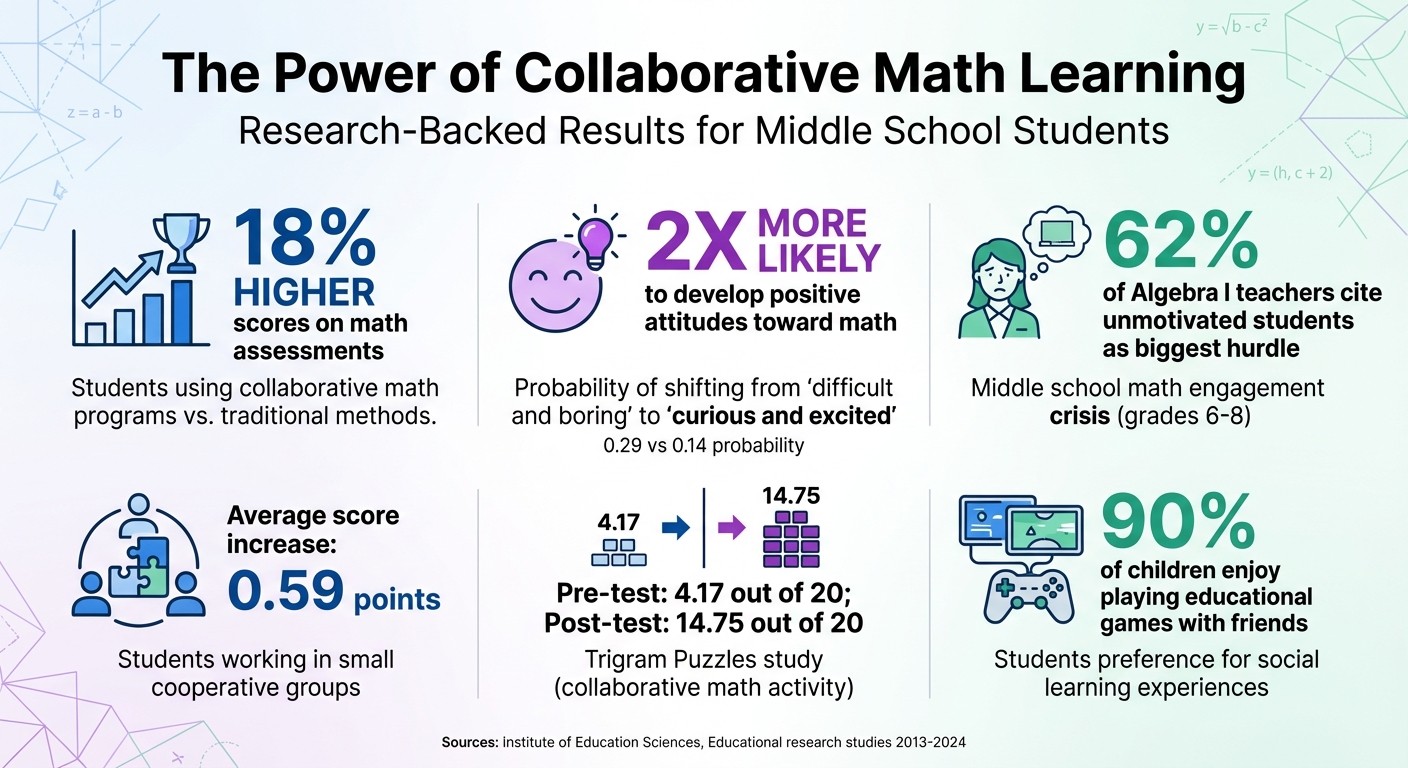
Collaborative play can transform math from a solitary, stressful task into an engaging group activity that builds confidence and improves skills. Research shows students working together in math games score 18% higher on assessments and are twice as likely to develop positive attitudes toward learning math. Here's how it works:
Middle school challenge: Math anxiety and disengagement peak in grades 6–8, with 62% of Algebra I teachers citing unmotivated students as their biggest hurdle.
Traditional methods fall short: Solo drills and memorization often fail to connect math to students' interests or everyday life, leaving them bored and anxious.
Collaborative play as a solution: Team-based math games create a low-pressure environment where students solve problems together, share strategies, and build social connections.
Programs like Infinilearn use multiplayer modes to make math interactive and enjoyable. Students team up to complete quests, solve challenges, and track progress, all while improving their math skills and confidence. This approach not only boosts academic performance but also turns math into a shared adventure students look forward to.
Impact of Collaborative Math Learning on Student Performance and Engagement
Math Bingo Game for Kids | Critical Thinking + Collaboration (Grades 3+)
Why Middle School Students Struggle with Math Engagement
Math struggles in middle school often stem from more than just boredom - it’s math anxiety. This emotional hurdle can block a student’s ability to process mathematical concepts, creating a frustrating cycle of poor performance and increasing anxiety.
Traditional teaching methods don’t always help. Many classrooms emphasize silent, individual work and high-pressure exams. This approach can leave students feeling disconnected and convinced they’re simply "not a math person." Unfortunately, it also strips away the collaborative and problem-solving aspects that could make math feel more approachable and relevant. When math is reduced to endless drills, students fail to see how it applies to real-world scenarios - like calculating sports stats, following recipes, or exploring patterns in art.
"If students only view math time as silent desk work and exams, they might assume they'll never be a math person. They'll miss out on the fascinating possibilities – and fun! – of math." - ExploreLearning
There’s good news, though. Studies show that game-based learning can significantly boost math proficiency compared to traditional methods. For example, research involving 306 middle school students in grades 6–8 revealed that interactive, game-based approaches outperformed paper-and-pencil tasks. Another study with 54 students highlighted that collaborative or competitive gameplay was far more engaging than working alone. These findings underline the importance of social interaction in math education.
Collaborative learning is especially powerful because it breaks down feelings of isolation. When students work together, they gain fresh perspectives, clarify confusing topics, and discover new ways to solve problems. By fostering these interactions, educators can help students feel more connected and confident in their math abilities, transforming anxiety into empowerment.
Where Traditional Teaching Methods Miss the Mark
The typical approach to teaching math - lectures, worksheets, and solo drills - often works against the goal of keeping students engaged. Picture a classroom where students sit silently, churning through problem after problem. This setup isolates them from the kind of interactive and dynamic experiences that make math more engaging. It also overlooks the social and emotional needs of middle schoolers, who thrive on interaction and collaboration.
But the issue isn’t just boredom. Traditional methods tend to emphasize speed and memorization over actual understanding. Students may breeze through drills, but without grasping the underlying concepts, these exercises lose their value. And when math feels disconnected from real-world applications, students struggle to see its importance. This disconnect often leads to math anxiety and a lack of interest.
Missing Social Interaction and Teamwork
One of the biggest drawbacks of solo learning is the absence of collaboration, which middle schoolers need to stay motivated. Studies repeatedly show that individual work is far less engaging than learning in a group setting. For example, a 2013 study involving 58 urban middle school students found that while working alone improved math fluency, it wasn’t nearly as enjoyable as collaborative learning. Students who worked solo were also less likely to recommend the activity to others.
"For most students, math motivation really can't be developed on their own as individuals." - Accelerate Learning
Without teamwork, students miss out on opportunities to discuss strategies and share approaches. This peer-to-peer interaction is crucial for building confidence and clearing up misconceptions. In one study involving 274 first and second graders, researchers found that social learning environments - whether competitive or collaborative - significantly boosted perseverance and positive attitudes compared to solo work. Unfortunately, traditional classrooms that enforce silence eliminate the "math talk" that helps students deepen their understanding.
The lack of collaboration isn’t the only issue. Traditional methods also rely heavily on repetitive drills that fail to create meaningful learning experiences.
Repetition Without Meaning
Worksheets and timed drills often focus on rote memorization instead of fostering a deeper understanding. This leads to what educators refer to as "meaningless memorization", where students learn steps and procedures without understanding the "why" behind them.
"Rushing into drills that promote meaningless memorization with endless repetition will not help in the long run." - Math Curious
Another issue is the lack of real-world connections. Without context, abstract formulas can feel irrelevant to students' everyday lives. Research shows that students working in isolation not only learn more slowly but also explore less compared to those in collaborative environments. This approach can contribute to the development of negative math identities, with students concluding that they’re just not "math people".
These gaps in traditional teaching highlight the need for more interactive and collaborative approaches that can transform how students engage with math.
How Collaborative Multiplayer Modes Solve the Engagement Problem
Collaborative multiplayer modes transform math learning into a shared, interactive adventure. Instead of struggling alone, students team up to tackle challenges like defeating a boss, completing quests, or advancing to the next level. This approach directly addresses the isolation and anxiety linked to traditional math instruction.
How Collaborative Play Functions
In these team-based math games, students work together toward shared goals that require coordination and mutual support. They communicate, exchange ideas, and solve problems as a group. Some games assign specific roles, such as "Manager" or "Strategist", to divide responsibilities, while in other cases, roles develop naturally.
One major advantage of this setup is that it eases the pressure on individual performance. The game environment encourages experimentation, allowing students to learn from their mistakes without fear of judgment. When success or failure is shared among the team, no single student feels the weight of responsibility. This collaborative structure creates a ripple effect, where students share strategies and insights to overcome challenges. These interactions not only improve performance but also boost confidence.
Benefits of Team-Based Learning
The benefits of collaborative play extend beyond the mechanics of teamwork. Research shows that this approach leads to both academic and social improvements. By reducing individual pressure, team-based learning directly combats the disengagement and anxiety often seen in traditional math settings.
For example, a 2015–2016 study in two Oxnard, CA, elementary schools explored the impact of Sokikom, an online collaborative math program supported by the Institute of Education Sciences. Students who regularly used the program scored 18% higher on CAASPP math assessments compared to those who didn’t. Additionally, the likelihood of students shifting from finding math "difficult and boring" to feeling "curious and excited" was nearly double - 0.29 versus 0.14.
Team-based learning also nurtures problem-solving skills and builds confidence. In July 2024, researcher Vinessa A. Palarao introduced "Trigram Puzzles" to seventh-grade students at Libertad Bajo Integrated School in the Philippines. The activity involved working in trios to solve math problems and create larger shapes. The results were striking: students’ average scores rose from 4.17 on the pre-test to 14.75 on the post-test out of 20. As Palarao observed:
"The collaborative nature of the trigram puzzles enhanced students' interest, participation, and deep cognitive processing".
Perhaps most importantly, collaborative play fosters positive associations with math. These activities become opportunities to build friendships and improve communication skills. Students often enjoy the experience so much that they recommend it to others and are eager to participate again. Programs like Infinilearn leverage this dynamic to reshape math learning into a lively, social experience.
How Infinilearn Uses Collaboration to Motivate Math Learners
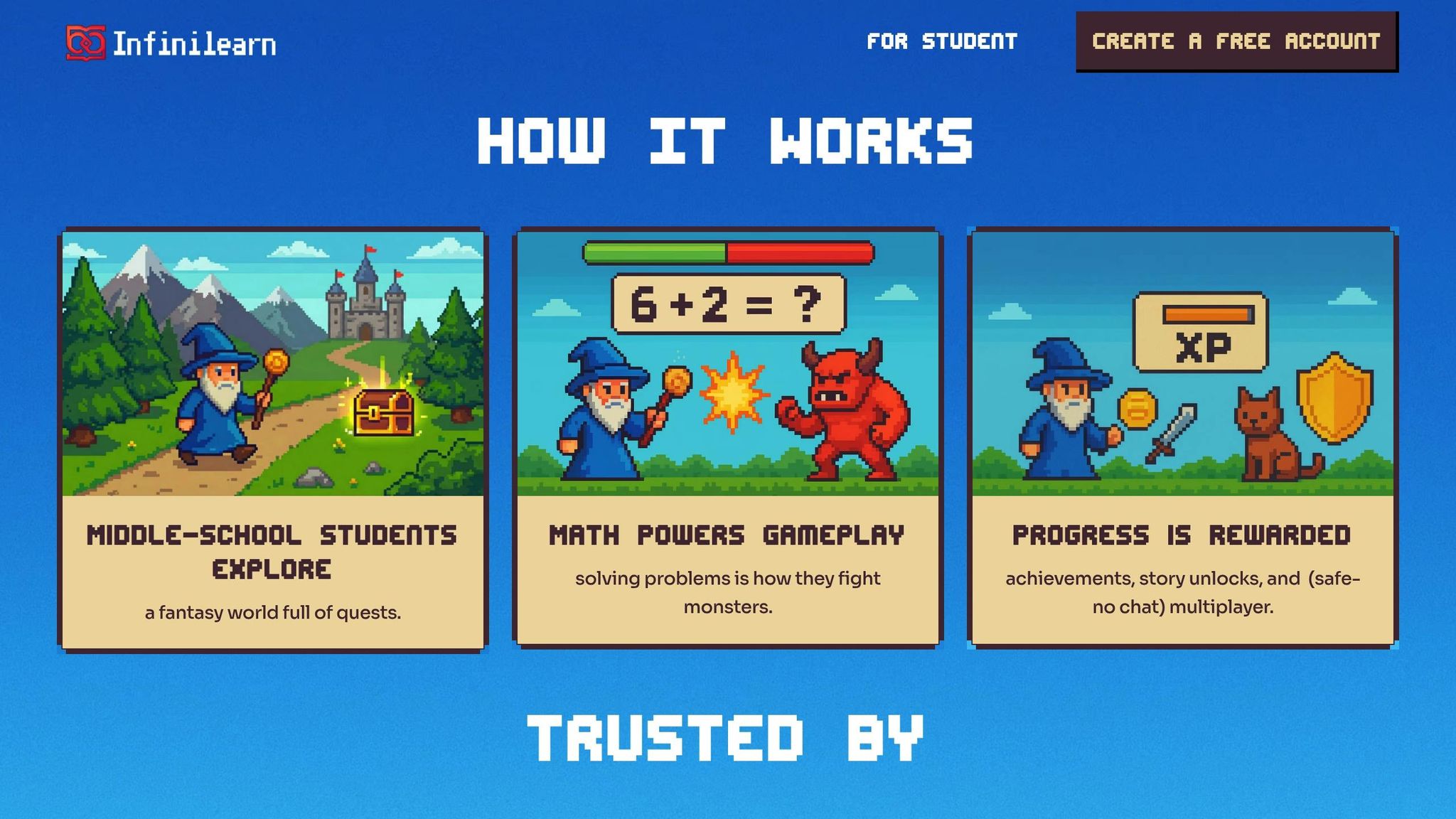
Infinilearn takes math engagement to another level by combining the power of collaboration with a fantasy-driven learning experience. In the immersive world of Numeria, sixth- to eighth-graders team up to restore the broken Arcane Seal. This transforms math from abstract concepts into shared adventures, where teamwork is the key to success.
Multiplayer Math Battles in Numeria
In Numeria's multiplayer mode, students band together to take on monsters and bosses by solving math problems tailored to their grade level. These turn-based battles encourage players to strategize and communicate, creating a rich environment for collaboration. Research shows that 90% of children enjoy playing educational games with friends, and Numeria’s quests, customizable characters, and diverse zones keep them engaged and motivated. The collaborative nature of these battles not only makes math more enjoyable but also strengthens players’ desire to keep playing and share the game with others. To keep the experience balanced, the challenges adapt to each student's individual skill level.
Adaptive Difficulty and Progress Tracking
Infinilearn ensures that every student is challenged appropriately by aligning math tasks with their grade level and personal abilities. This approach keeps advanced learners engaged while giving others the opportunity to build confidence and improve. The game adheres to Common Core standards for grades 6 through 8, allowing all players to explore Numeria at their own pace. A progress tracking dashboard, accessible to both parents and teachers, provides insights into each student's growth. As Professor Barbara Grabowski observed, "cooperative gameplay was most effective for promoting positive math attitudes regardless of students' individual differences".
Low-Pressure Learning Environment
Infinilearn creates a relaxed and supportive atmosphere by removing public leaderboards and competitive rankings. Instead, the game focuses on mastery and learning. Students are encouraged to see mistakes as opportunities to grow, rather than failures to avoid. This collaborative design allows players to experiment with strategies and share their thought processes in what researchers describe as a "space of safety", where they can explore ideas freely without fear of judgment.
Tips for Using Collaborative Play in Math Education
Boosting math engagement often requires creative strategies, and collaborative play can be a game-changer. Here’s how educators can make team-based math learning more effective.
Using Infinilearn in Group Activities
The secret to successful collaborative math games lies in shifting the focus from individual achievements to team success. Instead of rewarding who finishes first, encourage students to work together to complete a quest or defeat a common challenge. Organizing students into small groups of two to four players helps foster discussion and problem-solving while ensuring quieter students aren’t left out.
A great technique to try is the "Think-Ink-Pair-Share" method. First, have students independently jot down their strategy. Then, they pair up to share their thoughts before diving into multiplayer games. This ensures everyone contributes ideas and deepens their understanding. Research backs this up - students working in small cooperative groups on math problems tend to see an average achievement score increase of 0.59 points. These steps create a solid foundation for teamwork during gameplay.
Building Peer Support and Cooperation
Teamwork doesn’t just happen - it needs to be taught. Equip students with collaborative skills and assign specific roles during gameplay to keep everyone engaged. For example:
The Facilitator ensures the group understands the math problem.
The Recorder tracks the strategies the team uses.
The Resource Manager communicates with the teacher when questions arise.
These roles prevent one student from dominating and encourage balanced participation.
After each gaming session, set aside five minutes for group reflection. Ask questions like, "How did you help each other when someone got stuck?" or "What math patterns did you notice as a group?". This reflection time not only strengthens teamwork but also helps students view mistakes as chances to learn. As research scientist Allison Master explains:
"Children feel more motivated when they are part of a group".
Mixing students of varying skill levels in the same team can also be highly effective. Lower-achieving students gain new skills by learning from their peers, while higher-achieving students reinforce their knowledge by explaining concepts. Infinilearn’s adaptive difficulty ensures that each student faces challenges suited to their level, allowing everyone to contribute meaningfully to the team’s success.
Conclusion
Collaborative play shifts math from being a solitary, high-pressure task into a shared, engaging experience where students gain confidence, learn teamwork, and realize that math can actually be fun. Research shows that students participating in collaborative math programs scored 18% higher than their peers who didn’t. They were also more than twice as likely to experience a significant boost in motivation, with a 0.29 probability of shifting from seeing math as "difficult and boring" to feeling "curious and excited", compared to just 0.14 for students without access to these tools. As Professor Jan L. Plass from New York University observed:
"Collaboration resulted in stronger intentions to play the game again and to recommend it to others".
This kind of sustained engagement leads to deeper and lasting mathematical understanding.
Creating safe, collaborative spaces is key, and Infinilearn’s multiplayer math battles in Numeria deliver just that. Students tackle challenges together, help one another through tricky problems, and celebrate their successes as a team. With adaptive difficulty, every student gets to contribute meaningfully, no matter their starting skill level.
The research speaks for itself: collaborative play is a reliable and effective approach to improving math education. Infinilearn makes it easy to bring this strategy to life, blending the social interaction students enjoy with the rigorous math practice they need. The result? A new wave of motivated, self-assured, and capable mathematicians.
FAQs
How do multiplayer math games reduce math anxiety?
Multiplayer math games help ease math anxiety by promoting teamwork and social interaction, which creates a more encouraging space for learners. When students collaborate, they share strategies, assist one another, and build a sense of camaraderie. This reduces feelings of isolation and the fear of making mistakes. As a result, math practice becomes more enjoyable and less overwhelming, boosting motivation, confidence, and overall engagement.
How do teachers keep every student participating in group play?
Assigning specific roles such as facilitator, recorder, or timekeeper can help students understand their responsibilities and ensure everyone plays an active part. Using clear checklists is another way to keep students accountable, particularly in remote learning environments where structure is crucial. Beyond tasks, fostering a supportive atmosphere that prioritizes effort and teamwork over simply getting the "right" answer can inspire students to participate more openly. Recognizing skills like communication and strategic thinking with positive feedback further encourages engagement from all group members.
How does Infinilearn adapt difficulty for different skill levels?
Infinilearn fine-tunes the difficulty of tasks by evaluating each player's previous performance to gauge their current math skills. Based on this analysis, it customizes activities to align with their abilities, keeping them motivated and interested. This personalized method strikes a balance between being challenging and approachable, encouraging steady learning growth.